
What is the 3 3 3 Rule?
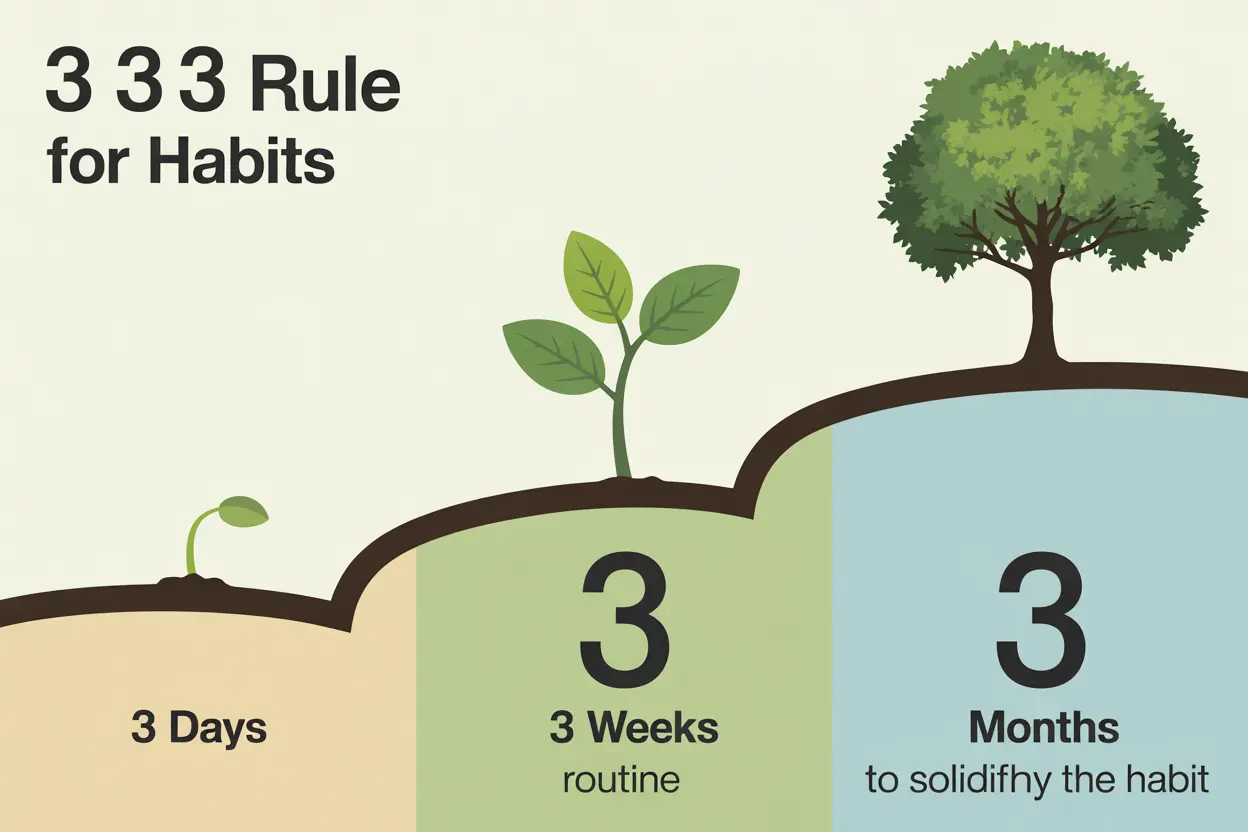
Have you ever wondered how some folks manage to build new habits that stick effortlessly? Well, it all boils down to the simple yet effective 3 3 3 rule for habits. This rule breaks down habit formation into three phases: 3 days to initiate, 3 weeks to turn the action into a routine, and 3 months to truly solidify that habit into your daily life. Getting familiar with this framework gives you a deeper understanding of the mechanics behind habit consistency and helps pave a smooth path toward lasting behavior change.
By embracing the 3 3 3 rule for habits, you’re not just randomly trying to change; you have a structured approach guiding you every step of the way. The trick is to focus on small but meaningful timelines, which makes the process less daunting and much more achievable. If you’re curious about the science behind why this works, exploring resources like the 4 Atomic Habits method can deepen your grasp on solid habit routines!
Why Understanding Habit Formation is Important
We all know how tricky it can be to switch up our daily behaviors—whether it’s hitting the gym, cutting down on screen time, or eating healthier. Understanding habit formation is essential because it reveals the hidden patterns behind why we do what we do, and how we can intentionally reshape those routines. The 3 3 3 rule for habits simplifies this complex process by acknowledging the different phases our brain needs to adapt to change.
Diving into the psychology and neuroscience of habits highlights why building consistency is crucial. For example, learning from insights discussed in Practicing Atomic Habits: A Practical Guide for Beginners can show you how to make habit tracking and habit motivation part of your daily arsenal. The sooner you understand these processes, the better you equip yourself to navigate the bumps and plateaus that come with behavior change.
Breaking Down the 3 3 3 Rule
3 Days to Start a New Habit
Imagine planting a seed—the first 3 days are like the initial watering and sunlight. In this early phase, the goal is simply to commit and start a new habit. This short window is critical because it sets intention and momentum for what’s ahead. During these first 72 hours, your brain is absorbing the novelty, and small wins build confidence.
It’s common that motivation runs high initially, but this phase demands a gentle push to keep the momentum. For example, if you decide to meditate every morning, committing to just 3 minutes daily helps bypass that overwhelming feeling of “where do I even start?” You’re building a foundation here. According to habit experts, focusing on these first 3 days increases the likelihood that you’ll stick around for the next phases.
Remember, the 3 3 3 rule for habits encourages you to be patient with yourself. It’s normal to stumble early on, but sticking through this short period is your golden ticket to creating a new behavior.
3 Weeks to Make the Habit a Routine
Once you’ve crossed the first hurdle, the next challenge is making the habit a seamless part of your life—that’s where the 3-week marker comes in. Over approximately 21 days, repeated action trains your brain to view the behavior as a routine, reducing the effort it takes to do it.
This timeframe aligns with a lot of insights discussed in the 1% rule: small, consistent gains compound into significant change. When the habit feels less forced and more natural, it’s easier to stay consistent. For example, going from a 3-minute meditation to 15 minutes feels like less of a chore because the practice is now embedded in your habit routine.
The magic of this 3-week window lies in the habit consistency you build—it’s when your brain starts rewiring itself to embrace the new behavior rather than resist it.
3 Months to Solidify the Habit
Here is where solid habit solidification happens. Three months might feel like a long time, but this phase transforms your new practice from a conscious effort into an automatic part of your lifestyle. According to research on habit formation timelines, this period varies among individuals but serves as a standard benchmark to reach lasting change.
By now, the habit has likely slid under your mental radar, acting like second nature. This is why stick-to-it-iveness is so crucial during these 90 days. Completing this phase means you not only formed a habit but integrated it deeply.
Think of it as setting the concrete foundation after building the frame and walls. The 3 3 3 rule for habits helps you appreciate every phase’s role in creating meaningful, enduring changes in your life.
The Science Behind the 3 3 3 Rule
Psychological Principles of Habit Formation
Habit formation isn’t just a catchy phrase; it’s deeply rooted in psychology. At its core, habits form through a loop of cue, routine, and reward, a cycle explored extensively in the process by which behaviors become automatic. This loop engrains the habit into your subconscious.
The 3 3 3 rule for habits taps into this by giving your brain enough time at each stage to cement these loops. During the first 3 days, your brain is getting used to recognizing the cue and action. Over 3 weeks, it starts expecting consistency. By 3 months, the reward system rewires so effectively that the behavior feels rewarding in itself.
Psychological concepts such as habit motivation and habit consistency explain why breaking down habit change into digestible phases helps conquer resistance and fatigue.
Neuroscience Insights on Habit Development
Neuroscience reveals what’s happening behind the scenes during habit development. Specific brain areas, like the basal ganglia, take charge of automatic behaviors, letting your conscious mind relax. The transition from deliberate action to automatic habit follows pathways strengthened through repetition over time.
The 3 3 3 rule for habits mirrors these biological processes. During the initial 3 days, your brain actively learns the new routine. In the subsequent 3 weeks, neural pathways reinforce, making the behavior more efficient. And in the 3-month window, these pathways become dominant, embedding the habit deeply.
Understanding this helps you appreciate why patience and persistence are essential; your brain literally needs time to rewire itself for habitual behavior change.
How to Apply the 3 3 3 Rule in Daily Life
Choosing the Right Habits to Form
Applying the 3 3 3 rule for habits thoughtfully starts with picking the right habits. Don’t overwhelm yourself with too many changes at once. Instead, focus on specific daily habits that align with your values and goals.
Think of habits as building blocks for your ideal life. Choosing habits related to personal growth or health, like drinking more water or journaling, sets you up for success. For guidance, exploring Atomic Habits Examples: Build Lasting Change With Small Habits can inspire habit choices that resonate.
Tracking Progress and Staying Committed
Tracking is a powerful tool in your habit arsenal. Using checklists, journals, or apps holds you accountable and gives tangible proof of your consistency. The 3 3 3 rule for habits becomes easier when you visualize your progress daily.
Tools like habit trackers not only remind you but also motivate by celebrating streaks. Linking your experience with habits discussed in Discipline Without Motivation: How to Stay Consistent reveals how discipline trumps fleeting motivation, especially during rough patches.
Adjusting and Upgrading Habits After 3 Months
After 3 months, your habit landscape has shifted. It’s time to adjust or upgrade your habits to keep growth flowing. Maybe your initial habit once felt challenging but now is smooth—it’s time to scale up or add complexity.
For example, if your habit was walking 10 minutes daily, you might increase duration or add jogging. The 3 3 3 rule for habits encourages this evolution to prevent stagnation and keep your brain engaged.
This phase blends reflection with progression, ensuring your habits remain fresh and impactful.
Common Challenges and How to Overcome Them
Dealing with Setbacks in the First 3 Days
The early stage of habit formation is often where you’ll meet your fiercest challenge—setbacks. It’s normal to skip a day or feel your motivation dip. What counts is how you bounce back. Leading experts offer strategies for dealing with interruptions, such as minimizing guilt and refocusing on your next opportunity.
The 3 3 3 rule for habits teaches us that a missed day isn’t failure but a moment to recommit. Embrace flexibility and remind yourself why the habit matters.
Maintaining Motivation Throughout the 3 Weeks
Motivation can wane as the novelty fades, making the 3-week phase a critical test of your commitment. To combat this, break habits into smaller steps and reward yourself for milestones. Connecting with accountability partners or communities boosts morale and keeps your momentum alive.
Reading strategies on staying consistent even when motivation fades can provide clever hacks to keep pushing through those dull moments.
Ensuring Habits Last Beyond 3 Months
Once past the 3-month mark, the challenge shifts to habit maintenance. Life changes and distractions can threaten your progress. Future-proof your habits by building in flexibility, revisiting your goals, and continuously tweaking your routines.
The 3 3 3 rule for habits supports creating habits that evolve, helping them survive disruptions and grow stronger over time.
Examples of Successful Habit Formation Using the 3 3 3 Rule
Personal Development and Health Examples
Many success stories showcase real-world examples of small changes leading to big results thanks to the 3 3 3 rule. For instance, someone starting with 3 days of daily journaling might find by 3 weeks they’re writing almost automatically, and after 3 months, it’s an essential part of their morning routine boosting mental clarity.
Or take health habits: committing to 3 days of workout sessions leads to weekly routines in 3 weeks, and solid fitness habits become lifestyle pillars after 3 months. These practical timelines encourage patience and steady evolution.
Work and Productivity Examples
Applying the 3 3 3 rule for habits at work can transform productivity. Starting with simple commitments like organizing your workspace for 3 days can progress into routine decluttering after 3 weeks and full productivity optimization within 3 months.
Another example is learning new software: practicing basics daily for 3 days, building working routines in 3 weeks, and mastering tools solidly by 3 months. These habits transform work life one phase at a time.
Explore more stories on habit development in productivity through articles like The 4 Atomic Habits: How to Build Good Habits & Break Bad Ones.
Additional Tips and Strategies for Habit Success
Using Technology and Apps to Support Habit Building
Leveraging tech is a fantastic way to boost adherence to the 3 3 3 rule for habits. A plethora of apps offer reminders, progress visualization, and habit streak tracking, making the journey interactive and motivating. Check out a wide range of modern applications that can fit your style and needs.
From simple checklist apps to sophisticated platforms with social features, technology aligns perfectly with the structured timelines of the 3 3 3 approach, helping you keep your eye on the prize.
Incorporating Accountability and Social Support
Nobody said habit building is a solo mission. Bringing in friends, family, or communities provides external motivation and accountability—key elements to beat the habit challenges many face. Sharing goals and celebrating wins amplify commitment.
Whether it’s a workout buddy or an online forum, social support keeps you anchored, especially during those vulnerable phases outlined in the 3 3 3 rule for habits. Focusing on small, incremental improvements becomes even more enjoyable and sustainable with a tribe cheering you on.
FAQs
What exactly is the 3 3 3 rule for habits?
The 3 3 3 rule for habits is a simple framework that breaks down habit formation into three phases—3 days to start a habit, 3 weeks to turn it into a routine, and 3 months to fully embed it into daily life. This rule helps you understand the timeline your brain needs to build new habits reliably and sustainably.
How does the 3 3 3 rule help in forming new habits?
By dividing habit formation into manageable stages, the 3 3 3 rule for habits reduces overwhelm and enhances habit consistency. Each phase reinforces your commitment, letting motivation and neural pathways develop naturally. This structure supports turning fleeting intentions into lasting behavioral change.
Is it really true that it takes 3 months to solidify a habit?
While the exact time varies, research indicates that around 3 months is a common timeframe for a new habit to become automatic and deeply ingrained. The 3 3 3 rule for habits uses this as a benchmark to help you be patient and persistent during the crucial final phase of habit solidification.
Can the 3 3 3 rule be applied to breaking bad habits?
Absolutely! The rule’s phased approach applies to both building good habits and breaking bad ones. By starting with 3 days of conscious effort to replace a bad habit, continuing for 3 weeks of routine practice, and 3 months of steadfast commitment, you can overwrite unwanted behaviors with healthier alternatives.
What are some effective ways to track progress using the 3 3 3 rule?
Using habit trackers, journals, or digital apps aligned with the 3 3 3 rule for habits phase structure can improve habit tracking. Celebrate milestones—after 3 days, 3 weeks, and 3 months—to stay motivated. These tools make progress visible, boosting accountability and long-term success.
Conclusion
The 3 3 3 rule for habits offers an elegantly simple yet powerful roadmap to understanding and mastering habit formation. By breaking down the journey into manageable chunks—3 days to initiate, 3 weeks to routine, and 3 months to embed—it transforms the overwhelming idea of change into achievable steps. This phased commitment style fosters habit consistency and encourages patience, while also providing clear progress milestones.
When combined with habit tracking, social accountability, and mindful adjustments, this rule significantly ups your chances of success. Whether your goal is personal growth or professional development, the 3 3 3 rule for habits equips you to turn small, deliberate actions into lasting lifestyle improvements that stick around for the long haul.