
Introduction to Mental Toughness and the 5 C’s
Definition and Importance of Mental Toughness
When life throws a curveball, the secret weapon to stand tall and keep going is mental toughness. It’s that invisible muscle in your mind helping you stay firm against stress, setbacks, and pressure. Think of mental toughness as your mental armor, buffering emotional ups and downs and empowering resilience. Without it, motivation and focus tend to waver, but with it, you get a clear edge to push through challenges.
Overview of the 5 C’s Framework
The 5 C’s of mental toughness—Control, Commitment, Challenge, Confidence, and Concentration—offer a neat framework to understand and develop this crucial skill set. This model was inspired by Clough et al. who developed the Four Cs model, and the 5 C’s take it further by adding an essential element. If you’re thinking about developing this kind of mindset, knowing these core components is key. This model beautifully complements another popular model, providing a pathway to mastering resilience and performance under pressure.
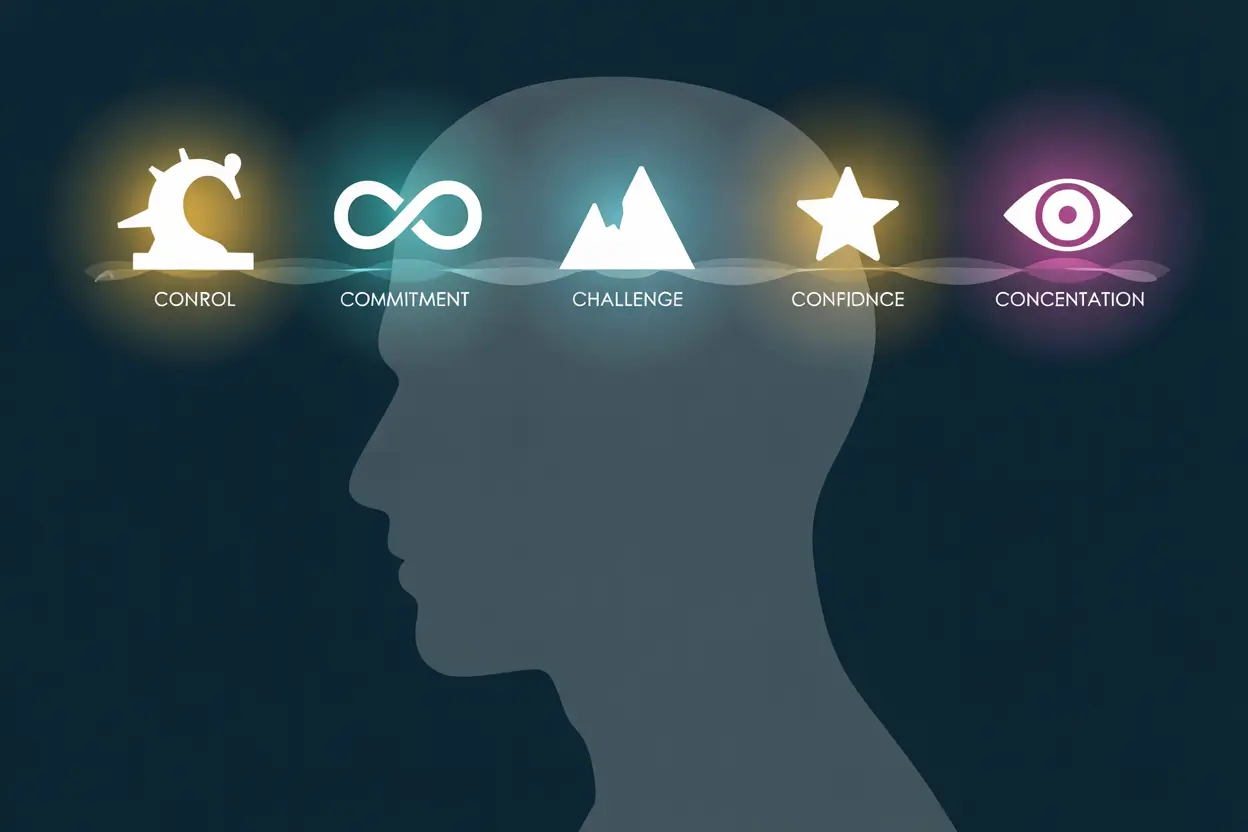
If you’re curious how these build on foundational mental resilience, check out more on 4 C’s of Mental Toughness.
Detailed Explanation of Each of the 5 C’s of Mental Toughness
Control: Managing Your Thoughts, Emotions, and Actions
Control is all about steering the ship of your mind. It means managing your thoughts, emotions, and actions—even when waves of stress and distraction crash over you. Imagine yourself as the captain of your mental vessel, deciding which storms to weather and which to steer around. Practicing emotional regulation ensures you’re not tossed about by every impulse or mood swing. This form of emotional control is the backbone of stress management and helps maintain composure in chaos.
Scientists emphasize the importance of this by highlighting how emotional intelligence ties into overall mental toughness. The ability to master your internal world translates directly into consistent output and psychological toughness. If you want to dig deeper, techniques like Cognitive behavioral therapy are excellent behavioral resources to help you reshape negative thought patterns and enhance control.
Commitment: Staying Dedicated to Your Goals
Without commitment, the best intentions often fizzle out. Think of commitment as the engine that drives long-term dedication—it’s your mental fuel to persist despite obstacles, failures, and distractions. Staying committed is like planting your flag on a mountain summit and refusing to budge until you’re standing victorious.
Commitment dovetails with goal setting and discipline, essential for following through on aspirations. It cultivates grit, that quality Elizabeth Duckworth and Angela Lee found in successful people who choose progress over temporary comfort. You may find the article Discipline Over Motivation: Why Consistency Always Wins insightful when exploring how commitment fosters mental endurance.
Challenge: Viewing Obstacles as Opportunities
Ever notice how some people bounce back from failures like a rubber ball? That’s the magic of viewing challenge as an opportunity rather than a threat. This component of the 5 C’s turns setbacks into stepping stones and discomfort into growth. It’s about having a positive mindset that embraces change rather than fearing it.
Adopting this challenge mindset fosters adaptability and resilience, crucial for navigating life with grace. When you start seeing stress as a motivator and not a roadblock, you unlock remarkable potential. Scholars from the field of Positive Psychology highlight this as a key driver of success and fulfillment.
For those curious about nuance, the article Mental Toughness vs Growth Mindset: Key Differences & Benefits explores distinguishing it from a growth mindset.
Confidence: Believing in Your Abilities
Confidence is the secret sauce that turns potential into performance. It’s trust in your skills, decisions, and worth that allows you to take bold steps, recover from mistakes, and face uncertainty with courage. Without self-confidence, even the simplest challenges can seem mountainous.
Building this self-trust is closely linked to mental strength training and psychological resilience. Confidence building can manifest through repeated successes or visualization techniques, reinforcing your belief in yourself. This mental fortitude is often what underpins the success of athletes and high performers alike, as shown in many studies exploring performance under pressure.
Cultivating this belief requires conscious work but pays off in spades.
Concentration: Maintaining Focus Under Pressure
Last but not least, concentration is about sharp attentional control when it matters most. It’s the ability to zero in on the task while blocking out distractions—a superpower in today’s noisy world. When your mind wanders under pressure, errors creep in; but with strong concentration, focus techniques anchor your effort like a compass guiding through fog.
Mindfulness meditation is a stellar practice to strengthen the brain’s ability to focus, as explained in this article on meditation. Training your mind-body connection creates a calm yet alert state, perfect for tackling high-stake tasks.
Applications of the 5 C’s in Daily Life and Performance
Mental Toughness in Sports
In sports, mental toughness is the difference between just playing and winning. Athletes harness the 5 C’s to sharpen focus, control game-day nerves, and embrace challenges—turning the pressure cooker into a launchpad. This mindset often underpins the success of athletes who outperform even in the toughest competitions.
Mental Toughness in Leadership and Work
At work and in leadership, mental toughness means leading with grit, decision-making under pressure, and staying committed to goals when roadblocks arise. Leaders who embody this toughness inspire confidence and foster resilience in their teams, driving performance and growth.
Mental Toughness in Personal Development
On a personal level, the 5 C’s empower self-motivation, steady goal perseverance, and emotional strength. They help you bounce back from failures and maintain focus on what truly matters—fast-tracking personal growth.
Techniques and Exercises to Develop the 5 C’s of Mental Toughness
Cognitive Behavioral Strategies
Cognitive Behavioral Strategies provide practical tools to reframe negative thoughts and shape positive behaviors, strengthening your mental toughness. Techniques include identifying cognitive distortions, challenging limiting beliefs, and building healthier thought patterns. These strategies enhance your control over emotions and actions, enabling better stress coping skills.
If you want to learn more about applying these techniques effectively, Cognitive behavioral therapy is a powerful resource recognized by psychologists worldwide.
Mindfulness and Meditation Practices
Mindfulness meditation trains your mind to stay present and focus under pressure, directly enhancing your concentration. Even just 10 minutes daily can build attentional control, reduce anxiety, and improve emotional regulation. This practice ties into the mind-body connection, making your mental toughness more resilient and grounded.
Explore simple guided practices that help strengthen the brain’s ability to focus in this mindful resource: 10-minute meditation.
Challenges and Misconceptions About Mental Toughness
Common Myths About Mental Toughness
A big myth is that mental toughness means being emotionless or tough all the time. In reality, it’s about managing emotions effectively—not suppressing them. Another misconception is that mental toughness is innate; chances are, it’s a skill anyone can cultivate with effort and patience.
Addressing Emotional Vulnerability
Being mentally tough doesn’t erase vulnerability. In fact, acknowledging and understanding your emotions often strengthens your control and resilience. Emotional vulnerability paired with self-awareness is not a weakness but a hallmark of true psychological toughness.
Frequently Asked Questions
What are the 5 C’s of mental toughness?
The 5 C’s of mental toughness include Control, Commitment, Challenge, Confidence, and Concentration. They represent core components that help individuals manage stress, maintain focus, and persevere toward their goals. Control is about regulating thoughts and emotions; Commitment keeps you dedicated; Challenge turns obstacles into growth; Confidence builds belief in yourself; and Concentration ensures focus under pressure. Together, these create a powerful framework for mental resilience and performance.
How can I develop the 5 C’s of mental toughness?
Developing the 5 C’s involves practical exercises like Cognitive Behavioral Strategies that reshape thinking patterns, and mindfulness meditation to boost focus and emotional control. Setting clear goals enhances commitment, while facing challenges head-on builds adaptability. Confidence can be strengthened through repeated small wins and positive self-talk. Incorporating these into daily practice gradually builds psychological toughness and self-motivation.
Why is confidence important in mental toughness?
Confidence fuels mental toughness by providing the trust and belief in one’s abilities to handle adversity and perform under stress. It helps transform doubts into courage, allowing individuals to take risks and recover from mistakes. Without confidence, even the easiest tasks can feel daunting, whereas a healthy belief in yourself can unlock potential and resilience.
Can mental toughness be improved at any age?
Absolutely! Mental toughness is a skill, not a fixed trait. Through consistent effort, practice, and adopting strategies like mindfulness and cognitive behavior techniques, individuals of any age can strengthen their mental strength training. It’s never too late to build resilience, improve emotional regulation, and enhance perseverance.
What role does concentration play in mental toughness?
Concentration is vital as it allows you to maintain focus during challenging or high-pressure situations, reducing errors and improving performance. It involves attentional control—keeping your mind fixed on the task despite distractions. Strong concentration supports emotional regulation and helps sustain commitment, making it a cornerstone of mental toughness.
Conclusion
The 5 C’s of mental toughness—Control, Commitment, Challenge, Confidence, and Concentration—form a foundational framework for building resilience and success in various life domains. Developing these components through targeted strategies and mindful practice can enhance one’s ability to navigate stress, maintain focus, and persevere toward goals. Embracing mental toughness is a continuous process that supports personal growth, leadership effectiveness, and athletic performance. Want to learn how to bounce back from life’s curveballs more effectively? These principles provide the sturdy foundation you need for psychological resilience and mental endurance.