
Introduction to the 21 66 90 Rule
Definition and Overview of the 21 66 90 Rule
If you’ve ever wondered how long it really takes to build new habits, you’ve probably come across the 21 66 90 rule for habit formation. This concept breaks down the habit development journey into three crucial timeframes—21 days, 66 days, and 90 days—each representing a key phase in behavior change and habit perseverance. It’s a popular framework for personal development that helps many understand the process of habit consistency from inception to permanent lifestyle adaptation.
The 21 66 90 rule for habit formation provides a structured timeline to help set expectations and measure progress when trying to adopt new routines or break bad habits. For example, the initial 21-day phase focuses on creating awareness and repetition, while the 66-day period aims at habit consolidation. Ultimately, the 90-day mark is about fully integrating the behavior into your daily life, making it second nature. This approach ties closely to the observations of plastic surgeon Maxwell Maltz, who first suggested how mental changes and habit adaptation require time read more here.
Origin and Popularity of the Rule
The roots of the 21-day idea date back to the 1960s from Maxwell Maltz’s work, but the combined timeline of 21, 66, and 90 days has gained traction in recent years through psychology and productivity circles. Modern research, including research by University College London, has expanded this by illustrating that habit formation timelines vary but generally cluster around an average of 66 days. The full 90-day period is often embraced by those serious about long-term habit formation and lifestyle overhaul, popularized across self-help platforms and productivity blogs.
Breaking Down the 21, 66, and 90-Day Periods
The 21-Day Habit Formation Concept
Starting with the 21-day mark, this phase is where most people experience the initial struggle and excitement of forming a new habit. Originally popularized by Maltz, this short period is about getting the ball rolling and making the new behavior part of your daily routine. It’s like planting a seed—you water it daily, but the sprout is still tender. The 21 days are crucial for creating momentum, increasing familiarity, and pushing past the first hurdles of psychology that make new routines challenging.
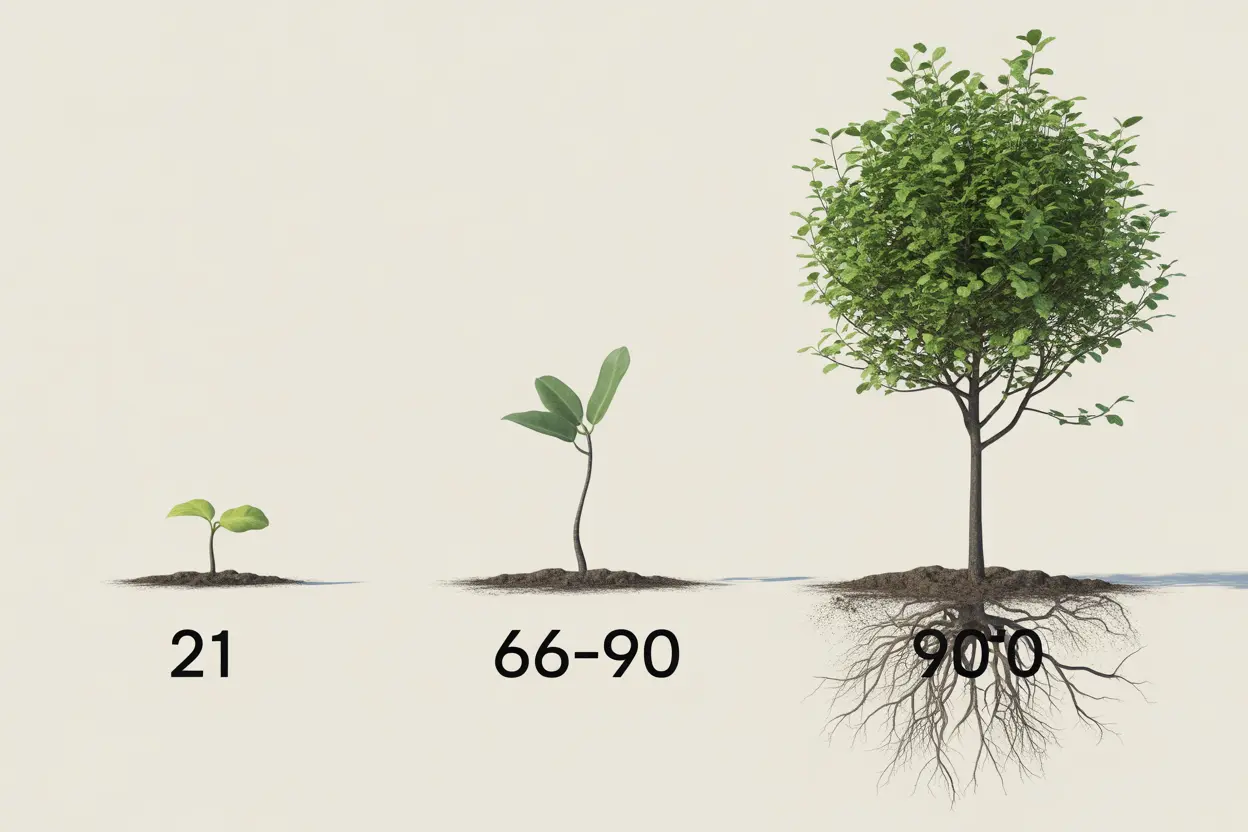
However, while 21 days is an encouraging target, don’t expect full mastery here. Think of it as laying the foundation for the habit development process, where you learn what triggers your behavior and start integrating it with your lifestyle.
Understanding the 66-Day Average for Habit Formation
Many scientific studies suggest that on average, habits take about 66 days to form, though this duration can vary between individuals and the complexity of the habit itself. This phase represents the transition from deliberate action to more automatic behavior, where the habit becomes easier and less cognitively demanding.
This stage is critical for habit perseverance, as individuals often face the real test of consistency and motivation here. The 21 66 90 rule for habit formation reminds us that discipline wins over fleeting motivation during these days—something well explored in Discipline Over Motivation: Why Consistency Always Wins. Sticking with the habit during this 66-day window helps ensure the behavior is wired together in your brain, reinforcing the habit formation timeline and boosting confidence.
The 90-Day Rule for Lifestyle Change
Crossing into 90 days, the timeline marks a pivotal milestone where the habit typically becomes an ingrained part of your lifestyle. This is more than just habit formation; it’s about solidify a permanent lifestyle shift where the change feels authentic and natural. At this stage, you’re not just doing the habit because you want to—you do it because you are that kind of person now.
The 90-day stretch also allows for fluctuations, setbacks, and course corrections without losing sight of the ultimate goal. It’s the period where adopting the right mindset plays a big role, as explained in the article on achieving long-term lifestyle change in 90 days. Committing to 90 days means you’re inviting genuine transformation, encompassing both behavioral modification and deeper shifts in thinking.
Scientific Research on Habit Formation Timelines
Key Studies and Findings on How Habits Form
Research on habit formation has evolved significantly, shedding light on the complexities behind the habit formation phases. One landmark study by Philippa Lally and her team at University College London meticulously tracked habit development in real-life settings. They found that while some simple habits took as little as 18 days to form, more complex behaviors averaged around 66 days. This nuanced insight is covered in the actual timeline for changing our behaviors and challenges the simplistic 21-day notion.
Additional studies indicate that habit formation is a gradual neurological process where repeated actions strengthen neural pathways, making the behavior easier and more automatic over time. It’s less about a fixed number of days and more about embracing habit tracking techniques and consistent practice. Research also shows that habit building strategies work best when paired with supportive environments, precise cues, and rewards that reinforce positive actions.
Factors Influencing Habit Formation Duration
Not all habits are born equal. The length of time needed to form a habit depends on several factors that influence the brain’s plasticity and your personal context:
- Complexity of the behavior: Simple habits like drinking water may take less time than quitting smoking.
- Frequency: More frequent habit repetition speeds up habit formation.
- Individual differences: Personality traits, motivation, and existing routines play a role.
- Environmental support: Freedom from distractions and positive reinforcement enhance habit sticking.
Experts in psychology emphasize that understanding these factors helps tailor your behavior change plan realistically. It’s why approaches like the 21 66 90 rule for habit formation are starting points, not rigid calendars.
Debunking the 21-Day Myth
The popular myth that you can engrain a habit in just 21 days is overly optimistic. Originally from Maltz’s observations in cosmetic surgery patients, this idea misinterprets the scientific complexity behind habit development. Many habits take much longer due to neurological and psychological factors.
Modern psychological insights recommend shifting focus from a fixed timeline to a commitment to steady progress. Adopting a flexible mindset, akin to the concepts in Shift From Fixed to Growth Mindset: A Practical Guide, allows you to embrace setbacks and keep moving forward without being discouraged by arbitrary time limits.
Practical Applications of the 21 66 90 Rule
Using the 21-Day Rule to Build New Habits
The 21-day period is perfect for beginners eager to start fresh habits. Use this phase to:
- Identify clear daily triggers
- Practice the habit consistently
- Build initial motivation and curiosity
Starting strong with this short timeline boosts your confidence and sets the tone for disciplined practice. Consider it a ‘trial run’ that sparks your commitment toward bigger milestones.
Maintaining Consistency Over 66 Days
Once you pass 21 days, the challenge becomes maintaining consistency through the next 66 days. This is where many people struggle, but if you can persevere, the habit moves into the more automatic zone. Strategies to stay on track include:
- Using reminders and habit trackers
- Rewarding small wins
- Engaging social accountability
This phase is about habit persistence—holding steady through fluctuations in motivation. Check out how long to break a habit and keep it broken for practical insights.
Achieving Long-Term Lifestyle Change in 90 Days
By the time you reach 90 days, you’re working toward a complete lifestyle change timeline. This means the new habit blends seamlessly into your identity and daily routine. It requires:
- Patience and long-term vision
- Flexibility to adjust routines
- Adopting the right frame of mind for success
The 90-day rule isn’t just about forming habits; it’s about transforming who you are. Those who embrace this mindset find themselves living healthier, happier lives without the struggle they once faced.
Tips to Successfully Implement the 21 66 90 Rule
Setting Realistic and Measurable Goals
Goals should be specific and achievable. Break habits into bite-sized actions so you can measure progress easily. For example, instead of “exercise more,” aim for “walk 10 minutes daily.” Clear goals fuel motivation for habits and clarify what success looks like.
Tracking Progress and Adjusting Strategies
Use journals, apps, or calendars to track daily behavior. When you hit hurdles, reevaluate your strategies. Habit tracking can reveal patterns and highlight areas needing adjustment, making habit tracking techniques invaluable.
Dealing with Setbacks and Staying Motivated
Setbacks are inevitable. The key is relying on a system rather than feelings to maintain consistency. Don’t see a missed day as failure; instead, recommit quickly. Cultivating compassion and persistence keeps your momentum alive.
Common Misconceptions and Criticisms of the 21 66 90 Rule
Why Habit Formation is Not One-Size-Fits-All
Everyone’s journey to habit mastery is unique. Factors like personality, environment, and the type of habit vastly change timelines. The 21 66 90 rule for habit formation serves as a guideline—not an ironclad rule. Overemphasis on fixed durations can cause frustration or unrealistic expectations.
Evaluating the Validity of the 21 66 90 Rule
While the 21, 66, and 90-day markers are backed by various insights and studies, critics argue that true behavior change is nonlinear and influenced by many variables, including psychology of habits and motivation shifts. It’s important to combine this framework with evidence from scientific habit studies and adapt it personally.
Using this method alongside flexible approaches and understanding habit science ensures a balanced, effective path toward lasting change.
FAQs
What does the 21 66 90 rule mean in habit formation?
The 21 66 90 rule for habit formation represents stages in building and solidifying habits: 21 days to initiate repetition, 66 days on average to form the habit solidly, and 90 days for a lasting lifestyle change. It’s a helpful way to frame your habit formation timeline and set realistic expectations for behavior change.
Is it true that habits only take 21 days to form?
No, the idea that habits take only 21 days to form is a myth. Habit formation varies, often requiring much longer—typically around 66 days on average, depending on the habit’s complexity and individual factors. The 21 days are just the starting point.
Why does it take 90 days to make a lifestyle change?
The 90-day period allows habits to integrate fully into your identity, shifting from an action you perform to part of your daily routine improvement. This timeframe supports true behavioral modification and lifestyle restructuring, making change sustainable long-term.
How can I apply the 21 66 90 rule to improve my daily routine?
Start by focusing on consistent repetition for the first 21 days, then maintain discipline to reach the 66-day mark where the habit feels more automatic. Finally, commit to 90 days to entrench the behavior into your lifestyle. Using tracking tools and realistic goals helps make this process manageable.
Are there scientific studies supporting the 21 66 90 habit rule?
Yes. Notably, Philippa Lally’s research at University College London provides evidence that habits take an average of 66 days to form, far exceeding the popular 21-day myth. The 90-day concept stems from clinical and behavioral psychology emphasizing long-term consistency and identity shifts.
Conclusion
The 21 66 90 rule for habit formation offers a valuable framework to understand how habits develop and how to create meaningful lifestyle changes. While the 21-day period provides an encouraging starting point, scientific research emphasizes that real habit formation often takes much longer—averaging around 66 days and even up to 90 days for lasting transformation. By setting realistic goals, tracking progress, and staying motivated, you can harness this rule to build sustainable habits that reshape your life. Remember, acknowledging the rule’s limitations and individual differences is essential for success in your habit development process.
For more on habit building strategies and timelines, explore our detailed guides like 21 90 Rule Habits: How to Build Habits That Actually Stick and 90 Day Rule for Habits: Build Lasting Change.