
Understanding the 90 Day Rule for Habits
Definition of the 90 Day Rule
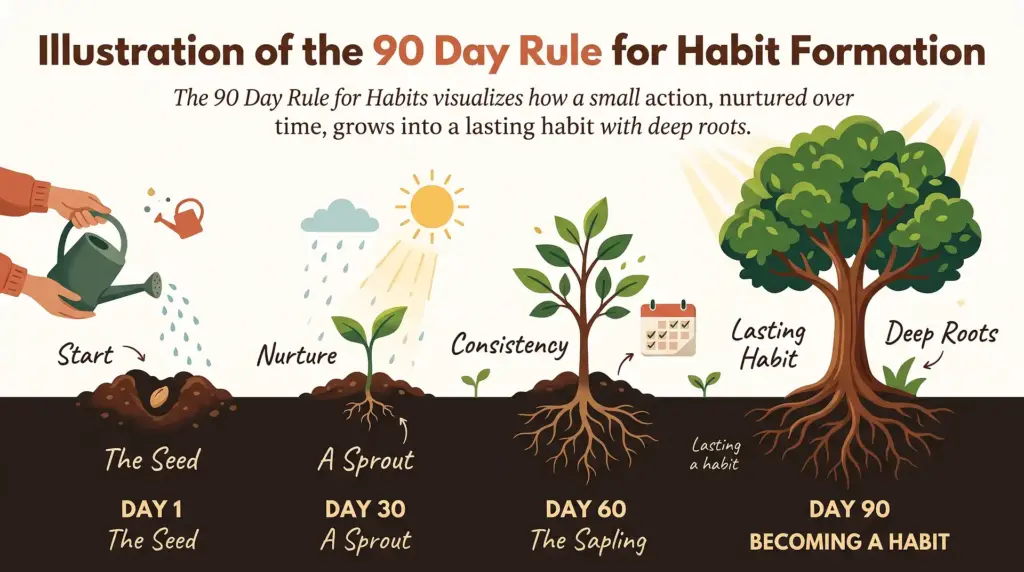
Ever heard of the 90 Day Rule for Habits? It’s a simple yet powerful concept that suggests committing to a new behavior for 90 days helps transform it into a lasting habit. Unlike quick fixes, this rule gives your brain enough time to adapt and solidify the new behavior into your daily routine. Think of it like planting a seed — it takes nurturing for the roots to grow deep, and 90 days is just the right amount of watering to establish a strong foundation.
Origins and Popularity of the 21/90 Rule
The 90 Day Rule is often paired with the idea that the first 21 days are crucial for initiation, hence the popular 21/90 rule. This concept gained popularity because it breaks down habit formation into two manageable phases: 21 days to start strong and 90 days to make it stick. Split between initiation and permanence, this approach resonates especially well with people aiming for lasting habits, making it an approachable framework for lifestyle change. If you want to dive deeper, check out other milestones related to habit development that complement this rule.
The Science Behind Habit Formation
How Habits Are Formed in the Brain
Understanding the 90 Day Rule for Habits is easier when you peek inside your brain. Habits form through a neurological process where repeated behavior creates new pathways making actions automatic over time. This process is sometimes called habit encoding. How habits are encoded in the brain explains that neurons adapt by strengthening signals for repeated actions, turning effortful tasks into effortless routines. It’s like your brain installing autopilot for behaviors you practice regularly, which is why consistency during those 90 days is so important.
The Variability in Habit Formation Timeframes
Not all habits take the same time to form, and the 90 Day Rule for Habits acknowledges this variability. According to one study found, the average time to form a habit is around 66 days, but this can range widely depending on the person and habit type. This is why 90 days becomes an ideal target—it accounts for those individual differences, ensuring you give your brain the best chance to cement new routines, whether they’re simple or complex.
Why 21 and 90 Days Matter – Psychological Insights
From a psychological viewpoint, the first 21 days serve as the critical launch phase, where the habit moves from intention to action. After this, the period extending to 90 days supports making that behavior an integral part of your identity. The 90 Day Rule for Habits leverages this by encouraging persistence beyond initial enthusiasm, reinforcing the behavior until it feels natural.
Applying the 90 Day Rule to Build Lasting Habits
Step 1: Committing to 21 Days for Initiation
Starting a habit can feel like pushing a boulder uphill, but the first 21 days are about building momentum. During these days, focus on showing up daily—even if it’s just a small effort. Why? Because those initial actions teach your mind what to expect and begin rewiring your brain. It’s the ignition spark—you’re firing up motivation and creating the first sparks of habit consistency. If you want tips on staying committed through this launch phase, the Motivation vs Discipline: Which Is More Important for Goals? article is an excellent resource.
Step 2: Extending Commitment to 90 Days for Permanence
Once you’ve survived that initial 21-day push, the journey continues. The 90 Day Rule for Habits stresses that pushing through to 90 days is essential to embed the habit deeply, making it part of your identity and lifestyle. It’s where many people falter—but those who persist see real transformation. This phase is like turning a frequently walked path into a well-paved road—the easier it is to travel the better. To cultivate these routines that truly become part of your lifestyle, planning and consistent action are key.
Creating a Habit Formation Plan
So how do you practically apply this? Here’s a simple plan:
- Choose one habit you want to build—don’t overwhelm yourself.
- Set clear and measurable goals for the first 21 and 90 days.
- Track your progress daily to reinforce commitment.
- Use reminders and cues to trigger the habit consistently.
- Celebrate small wins along the way to maintain motivation.
Combining these steps with the 90 Day Rule for Habits creates a roadmap for lasting change. For more structured insights, the 21 66 90 Rule for Habit Formation: How It Really Works article details advanced habit development techniques.
Examples of Habits That Can Benefit from the 90 Day Rule
Health and Fitness Habits
Trying to exercise regularly or eat healthier? The 90 Day Rule for Habits fits perfectly here. Building strength or changing eating habits isn’t instant—it requires consistent effort. By focusing on 21 days to create momentum and extending to 90 days, many find that workouts become a natural part of their day rather than a chore. Even small routines like drinking more water or stretching can benefit immensely from this timeline.
Productivity and Work Habits
Want to improve your work efficiency or reduce procrastination? Committing to focused work sprints or organizing your day through the 90 Day Rule for Habits helps these productivity behaviors stick. For example, daily planning or habitually closing tabs at day’s end start as uphill battles but turn into smooth routines after consistent practice.
Mindfulness and Mental Well-being Habits
Incorporating meditation, journaling, or gratitude exercises benefits from sustained practice too. The 90 Day Rule for Habits supports this by providing a clear timeframe to transform these mental well-being practices from occasional tasks to rhythmic parts of your lifestyle.
Common Challenges and How to Overcome Them
Dealing with Motivation Fluctuations
Let’s be honest—motivation can be a roller coaster. The 90 Day Rule for Habits recognizes that early bursts of excitement can fade. To manage this, lean on discipline, set up cues, and remind yourself why the habit matters. For a deeper dive into balancing motivation and discipline, the Motivation vs Discipline: Which Is More Important for Goals? piece is a great read.
Handling Setbacks and Relapses
Slip-ups happen—don’t beat yourself up! The key with the 90 Day Rule for Habits is to keep perspective and not let a relapse become a reason to quit. Embracing an attitude where you learn and grow from setbacks can make all the difference. Your mindset plays a huge role in bouncing back, and learning to view these setbacks is critical for making lifestyle changes that last.
Maintaining Consistency Over 90 Days
Consistency is the secret sauce of the 90 Day Rule for Habits. To maintain it, build routines that fit your lifestyle and use tools like habit trackers to stay accountable. Also, lean into your support system. Understanding the interplay between your initial drive and consistent effort can help you stay the course.
Tools and Techniques to Support the 90 Day Habit Formation
Using Habit Trackers and Journals
Tracking progress visually can be like having a cheerleader in your pocket. Habit trackers allow you to see daily wins, which boosts motivation and commitment. Journaling helps reflect on challenges and successes, creating a feedback loop that improves persistence. Habitify and Active Iron apps offer excellent options for keeping your journey organized.
Leveraging Support Groups and Accountability Partners
You’re not alone! Sharing your goals with friends or joining groups provides encouragement and keeps you honest. Accountability partners remind you why you started and help push through rough patches, making it easier to reach that 90-day milestone.
Incorporating Technology and Apps
In today’s digital age, there’s no shortage of help. Using a variety of digital tools like habit tracking apps can automate reminders and progress monitoring, making habit formation smoother and more fun.
FAQs
What exactly is the 90 day rule for habits?
The 90 Day Rule for Habits is a behavior change method suggesting that practicing a new habit consistently for 90 days helps make it a permanent part of your lifestyle. It builds on the idea that the initial 21 days help initiate the behavior, but extending to 90 days provides enough time for the brain to create lasting neural pathways, turning a conscious action into an automatic routine.
How does the 21/90 rule differ from other habit formation theories?
The 21/90 rule breaks habit formation into two phases: 21 days to start the habit and 90 days to solidify it. This contrasts with some theories suggesting a fixed timeframe for all habits, as it accommodates variability and focuses on both initiation and permanence. This makes it more practical and psychologically grounded.
Can all habits be formed in 90 days?
While 90 days is a solid benchmark, not all habits are created equal. Some simple habits might form faster, while complex behaviors could take longer. The 90 Day Rule for Habits is a flexible guideline considering average formation times, but personal differences and habit complexity play big roles.
What are effective ways to stay consistent for 90 days?
Staying consistent requires a plan: setting clear goals, tracking progress, finding accountability partners, and managing motivation dips. Using reminders, rewarding small wins, and focusing on identity shifts rather than just outcomes can also boost consistency.
Why is the first 21 days critical according to the 21/90 rule?
The first 21 days are crucial because this phase transitions a behavior from intention to regular action. It helps build momentum and establishes the initial neural pathways in the brain. Without this phase, it’s easy to falter before the habit takes root.
Conclusion
The 90 Day Rule provides a practical framework for turning behaviors into lasting habits by committing to consistent practice for approximately three months. Understanding the science behind habit formation reinforces why the initial 21 days serve as a foundation and why extending the effort to 90 days helps embed the habit permanently. With proper planning, tools, and strategies to overcome challenges, anyone can effectively use the 90 Day Rule for Habits to foster meaningful lifestyle changes. Embracing this rule encourages patience, persistence, and structured commitment for lifelong benefits.